Temporary job site power requires matching continuous electrical load demands directly to alternator output rather than estimated nameplate ratings. For small field trailers, tool charging stations, and basic hand…
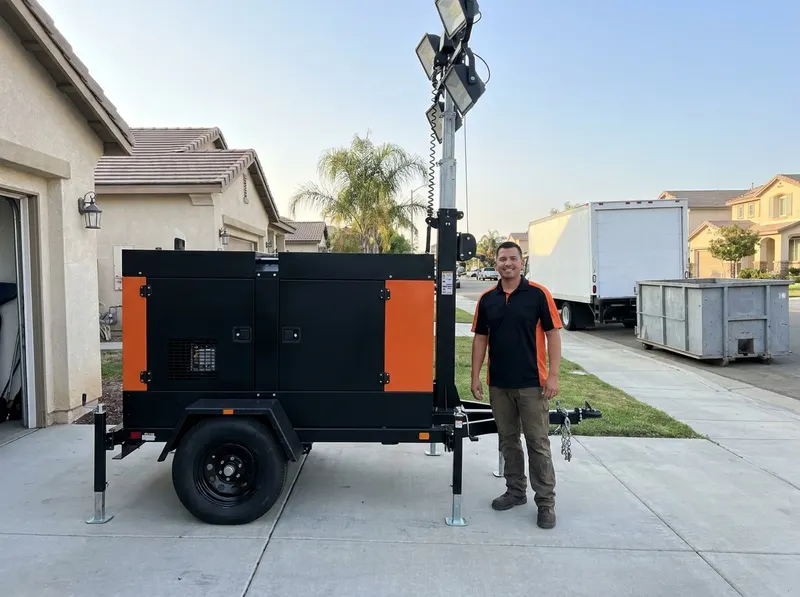
Temporary job site power requires matching continuous electrical load demands directly to alternator output rather than estimated nameplate ratings. For small field trailers, tool charging stations, and basic hand equipment along Magnolia Center commercial strips or residential builds in Orangecrest, a 20kW to 45kW mobile diesel unit supplies continuous single-phase 120V/240V power without the fuel wash problems caused by wet-stacking underloaded machinery. Heavy commercial masonry cutting, structural framing, and concrete pumping operations near Industrial corridors by Eastside or Downtown Riverside demand 70kW to 150kW three-phase 208V or 480V units capable of handling high motor-starting inductive surges. Selecting an undersized generator trips main breakers on motor startup, while paying for a 150kW plant on a low-amp task burns excessive off-road diesel and risks carbon buildup in the exhaust system; matching the specific running amperage prevents costly work stoppages.
Night paving projects, deep trenching along Arlington Heights utility easements, and evening logistics staging near March Air Reserve Base rely on 4-fixture mobile LED light towers providing 360-degree illumination across a 30-foot telescoping vertical mast. Modern LED fixtures draw significantly less engine wattage than legacy 1,000-watt metal halide bulbs, enabling internal fuel tanks to sustain continuous 60-to-100-hour run cycles between re-fueling runs. Every rig is equipped with sound-attenuated enclosures operating down to 63 dBA at 23 feet, satisfying local municipal noise curfews near residential boundaries like Victoria Woods, Canyon Crest, and Woodcrest. Delivery staging accounts for real site topography, utilizing outrigger stabilizers to secure towers against gusting Santa Ana wind corridors through the Box Springs and Mount Rubidoux passes.
Logistics are straightforward: 1. Confirm your load requirements, phase type (single vs. three-phase), and job site delivery window by phone at (951) 814-1272. 2. A commercial hauler drops the towable plant directly at your designated firm-ground pad, sets the wheel chocks, and deploys the grounding rod. 3. Technicians complete an on-site operational check with your site foreman before logging the baseline engine-hour meter. Ground placement requires an accessible flat grade free of low-hanging citrus canopy in zones like California Citrus State Historic Park or soft sandy soils common to La Sierra, ensuring safe equipment retrieval upon project completion.
Every job gets a firm, written price after a free on-site visit.
Tell us about your commercial generator & light tower rental job in Riverside and we'll send a clear, written quote, usually the same day.
 Express Dumpster Rental