Selecting the right aerial platform depends on deck capacity, ground slope, and pathway clearance. Electric slab scissor lifts, such as a 19-foot platform height unit measuring 30 inches wide, pass through standard…
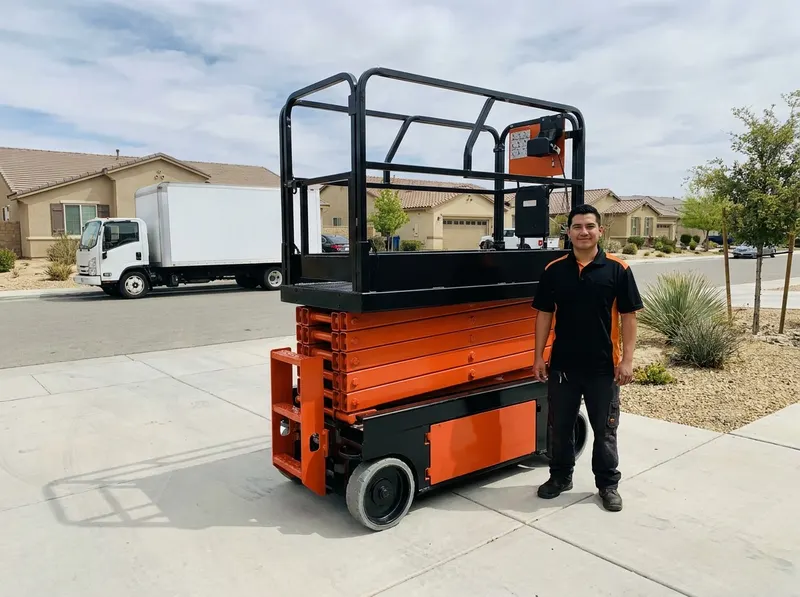
Selecting the right aerial platform depends on deck capacity, ground slope, and pathway clearance. Electric slab scissor lifts, such as a 19-foot platform height unit measuring 30 inches wide, pass through standard 32-inch commercial doorways and operate on smooth interior concrete across warehouses near March Air Reserve Base or commercial remodels along Magnolia Avenue in Magnolia Center. These units feature non-marking solid rubber tires and zero tailpipe emissions, making them mandatory for indoor mechanical work. In contrast, outdoor dirt or uneven aggregate pads, such as grading sites in Woodcrest, agricultural acreage near California Citrus State Historic Park in Arlington Heights, or rocky foothill lots near Canyon Crest, require dual-fuel or diesel rough-terrain models. Rough-terrain units supply foam-filled 4WD lug tires, active oscillating axles, and 45-percent gradeability, although their wider 69-inch to 84-inch chassis will not clear standard interior passage doors.
A common misunderstanding is confusing platform height with working height. Working height consistently adds 6 feet to the platform floor measurement, meaning a 26-foot platform lift elevates a 6-foot tradesperson to a 32-foot working reach. For warehouse high-bay lighting along the Eastside industrial corridor or structural beam repairs in Downtown Riverside, an insufficient height rating stops work entirely, while an oversized lift adds unnecessary transport tonnage. Ground surface condition is the primary site constraint; slab scissor lifts demand a maximum grade limit under 3 degrees (approximately 25 percent drive grade when stowed), and integrated tilt sensors automatically cut drive functions on unlevel asphalt. Deliveries to steep residential access points around Mount Rubidoux or Victoria Woods require a level drop zone on stable pavement before unloading off the tilt-bed trailer.
Project scheduling follows a clear three-step sequence. First, verify the target hookup height, overhead powerline setbacks (maintaining the OSHA-mandated 10-foot clearance from energized 50kV lines), and entry-gate width. Second, schedule the exact delivery window to align with trade schedules, avoiding the rental clock ticking before the crew stands on site. Third, complete an initial operational run-up, validating ground-control lower overrides, emergency stop switches, and battery charge levels before putting personnel aloft.
Every job gets a firm, written price after a free on-site visit.
Tell us about your scissor lift rental job in Riverside and we'll send a clear, written quote, usually the same day.
 Express Dumpster Rental